Most break-ins are not random. Burglars choose, watch and plan, sometimes days in advance. Once you understand how they think, it is easier to see what puts them off.
How a break-in is prepared
The typical process has several steps:
- Choosing a target. A house that looks empty, a business with valuable equipment, a shop with cash.
- Watching. Who leaves and arrives when, when the lights are on, when the car is in the drive.
- Mapping the surroundings. Which neighbours are home, how to approach unnoticed and, above all, how to get away.
- Picking the time. Often not at night but during the day, when people are at work and movement on the street surprises no one.
A burglar who has picked your property is better prepared than you might think.
Social media as a source
An airport selfie, a beach check-in or a post saying "finally a week in Croatia" tells a burglar exactly when your house will be empty. Photos of a new car, electronics or jewellery show what is worth looking for.
Practical tips:
- post holiday photos after you get back,
- check who can see your posts,
- do not publish your address or photos that make the house easy to identify.
Why fences and security doors are not enough
A high fence looks safe but can actually help an intruder. Once he is over it, it hides him from neighbours and passers-by and gives him all the time he needs.
Security doors are a good investment, yet most burglars still come in through the front door. Given enough undisturbed time, they can deal with many locks. Others simply choose a window or patio door.
Physical barriers slow an intruder down. They do not tell anyone that something is happening.
What a camera system adds
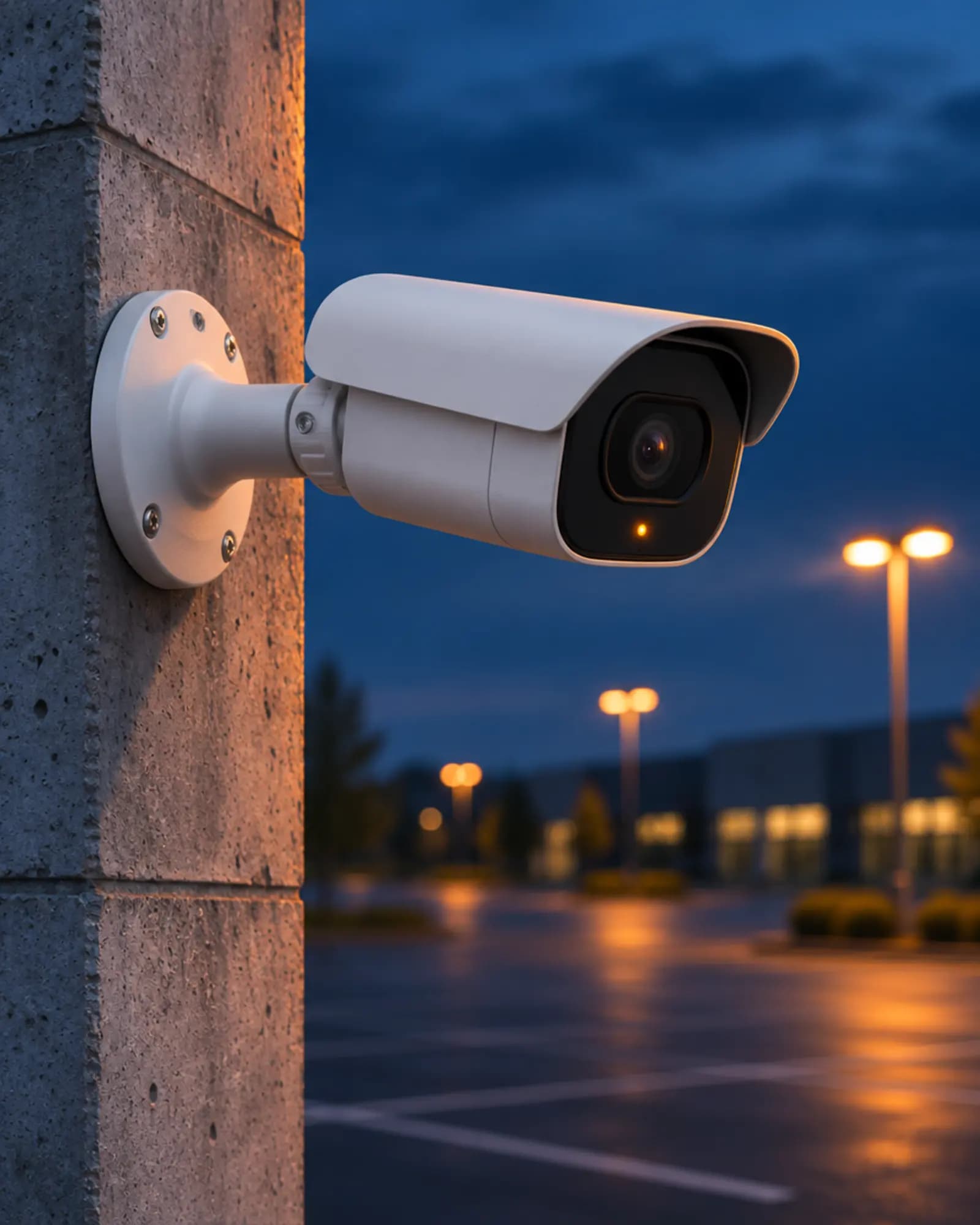
- Deterrence before the attempt. Visible cameras put off a large share of would-be burglars while they are still watching the property. They look for an easier target.
- Perimeter protection, not just the house. Cameras cover the grounds and surroundings, catching an intruder before he touches a window or door and preventing damage to the building.
- Night vision. The same protection day and night.
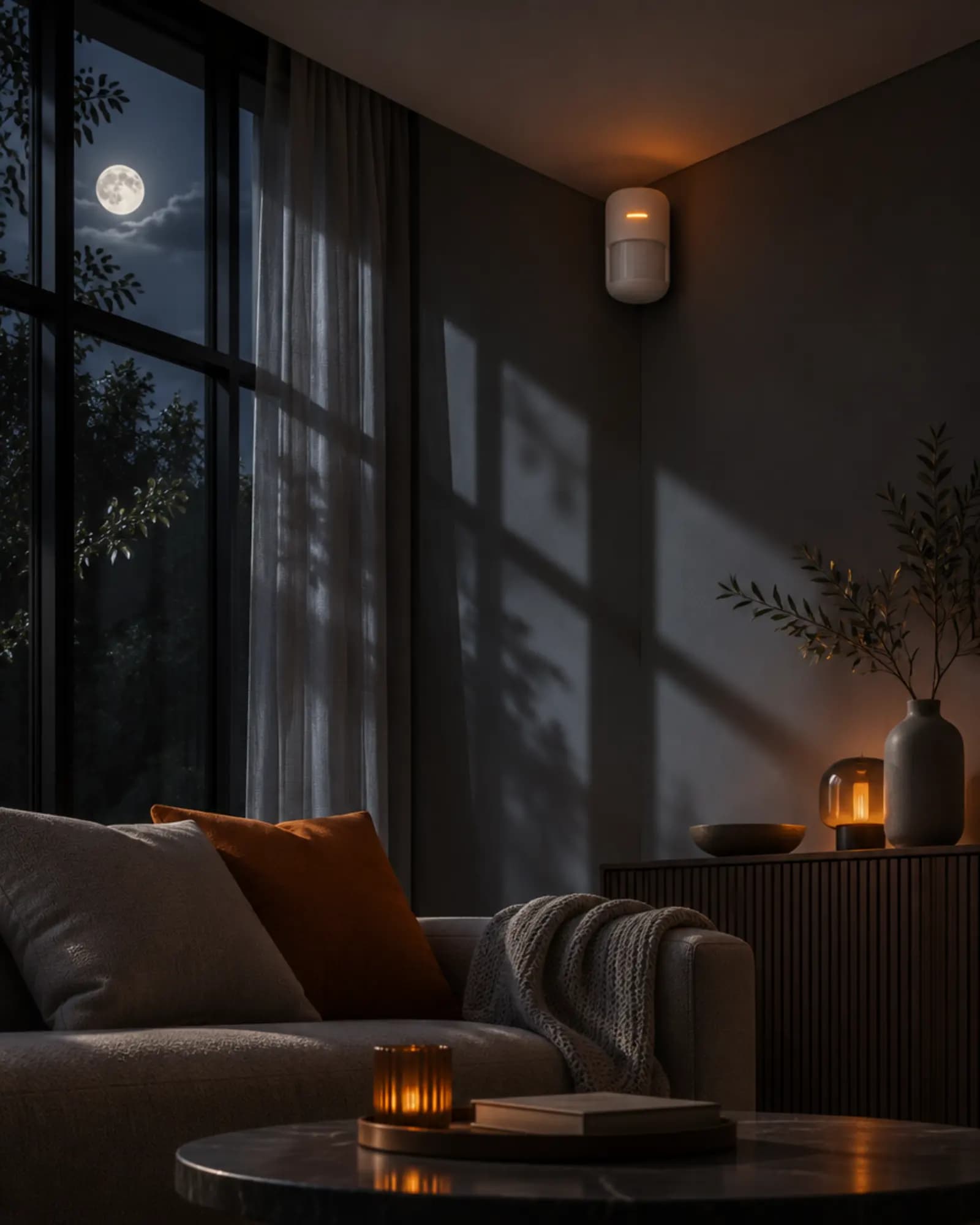
- Working with the alarm. Cameras wired into the alarm input raise the alarm as soon as someone moves on the grounds. Alarm and cameras act as one system: double protection.
- Helping the operator. When connected to a monitoring centre, video monitoring shows the operator the footage the moment the alarm goes off, so they know whether it is a real intrusion.
- Minimal running costs and affordable prices.
What we install
We use Hikvision technology and design each solution for the specific property, with 4–8 MP IP cameras and intelligent analytics such as line-crossing or zone-entry detection. Footage is recorded to hard drives in high-performance IP recorders and kept for 10 days in line with GDPR.
Frequently asked questions
Aren't cheap online cameras enough?
For the occasional look on your phone, perhaps. For protecting a property they lack reliable recording, night vision, analytics and, above all, a link to the alarm and to someone who responds.
Where should cameras go?
Entrances, patio doors, the driveway and the property boundary. We plan exact placement after a site survey so cameras do not cover more than they should, such as a neighbour's garden.
How long is footage kept?
In our installations, 10 days in line with GDPR.
Can I view the cameras on my phone?
Yes. Live view and recordings are in the app, and with a monitoring connection our operator sees them too when an alarm goes off.
A checklist for your home
- Are the entrance and grounds lit at night?
- Can the front door be seen from the street or a neighbour's house?
- Are patio doors and ground-floor windows secured?
- Does anyone know what is happening on the property while you are away?
- Will someone who can respond immediately learn about an alarm?
If you hesitated on any of these, we are happy to go through the options with you.