
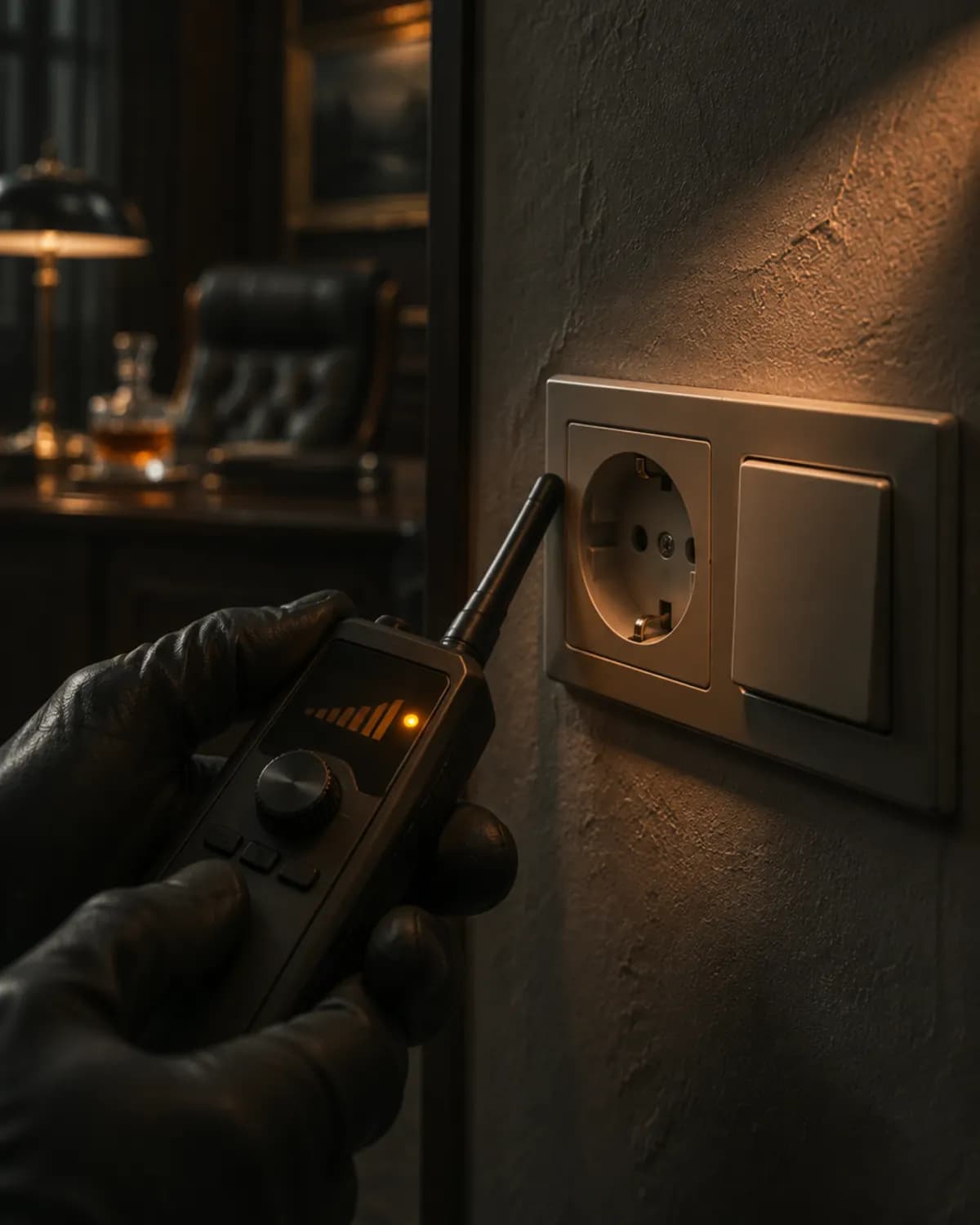
Where do you look for bugs? First you need to know which warning signs may point to listening devices. Today the options for eavesdropping are as varied as the shelves of a supermarket. Bugs can be hidden in cars and interiors, and some can be controlled remotely.
In everyday use there are no visible signs. Some devices are installed so cleanly that there is nothing to notice, which is why a professional sweep is the only reliable protection.
What are the warning signs?
- Confidential information has become public for no clear reason
- Others know privileged details of your private or working life
- Someone has entered your premises, with or without theft
- Doors or windows show signs of forced manipulation
- Electronic devices show interference, e.g. on the radio, which may indicate a radio bug
- You suspect furniture, fittings or wall panels have been tampered with
- You found dust or bits of masonry where there should be none
- Sockets and switches have shifted and the plaster around them is damaged
- Call volume or quality on your phone has changed
- You feel you are being watched
- You have noticed suspicious people or vehicles near your home or workplace
There are usually two kinds of eavesdropping. The amateur kind is most common in family or workplace disputes and uses off-the-shelf products sold online.
More sophisticated methods are used against competitors or when your information is valuable. The attacker enters the office without triggering the alarm or damaging the door, photographs the interior and assesses the options. Such jobs are usually run by a specialised agency posing, for example, as a detective firm, since installing bugs is illegal.
So, to answer the opening question: a layperson has very little chance of finding a bug, unless the attacker used basic equipment and installed it badly. Even common devices are hard to find without proper equipment.