Today the options for eavesdropping are as varied as a supermarket shelf. A small device that records or transmits sound costs a few euros online, takes minutes to install and can be hidden so well that you will never see it in everyday use. Some are remote-controlled, others switch on only when they hear sound. Bugs turn up in offices, meeting rooms, homes and cars.
Who would want to listen to you? More people than you might think: a competitor, a former business partner, an employee in a dispute, or someone close to you in a family conflict.
11 warning signs
None of these proves anything on its own. When several appear together, it is time to pay attention.
- Confidential information has become public for no clear reason, such as details of a meeting only a few people knew about.
- Others know privileged details of your private or working life that they had no way of learning.
- Someone entered your premises, with or without theft. A break-in where "nothing was taken" is suspicious.
- Doors or windows show signs of tampering, even small scratches around a lock.
- Electronics show interference, such as crackling on the radio or hum in speakers, which can indicate a radio bug.
- Furniture, fittings or wall panels look moved, as if someone had handled them.
- You found dust or bits of masonry where there should be none, typically under a socket, switch or ceiling light.
- Sockets or switches have shifted and the plaster around them is damaged.
- Your phone's call volume or quality has changed, with echoes or unusual sounds.
- You feel you are being watched. Intuition is not evidence, but do not ignore it.
- Suspicious people or vehicles keep appearing nearby, especially the same cars with people just sitting in them.
Amateur versus professional eavesdropping
In practice we see two kinds.
Amateur eavesdropping is most common in family disputes or workplace conflicts. It uses off-the-shelf devices bought online and is usually planted by someone with natural access to the space.
Sophisticated eavesdropping is used in business competition or wherever information is valuable. The attacker gets in without triggering the alarm or visibly damaging the door, photographs the interior and decides where to place the device. Such jobs are usually run by a specialised group posing outwardly as, for example, a detective agency, because installing bugs is illegal.
Why not search yourself
A layperson only finds a bug if it was cheap and badly installed. Even common devices are very hard to find without proper equipment. On top of that:
- an amateur search can tip off the attacker, who then removes or moves the device,
- you may destroy traces that could otherwise serve as evidence,
- a false sense that "there is nothing there" is worse than uncertainty.
What to do if you suspect a bug
- Do not discuss your suspicion in a room that may be bugged, or on a phone that may be compromised.
- Do not move or dismantle anything. Leave the space as it is.
- Call specialists from somewhere else and arrange a discreet sweep.
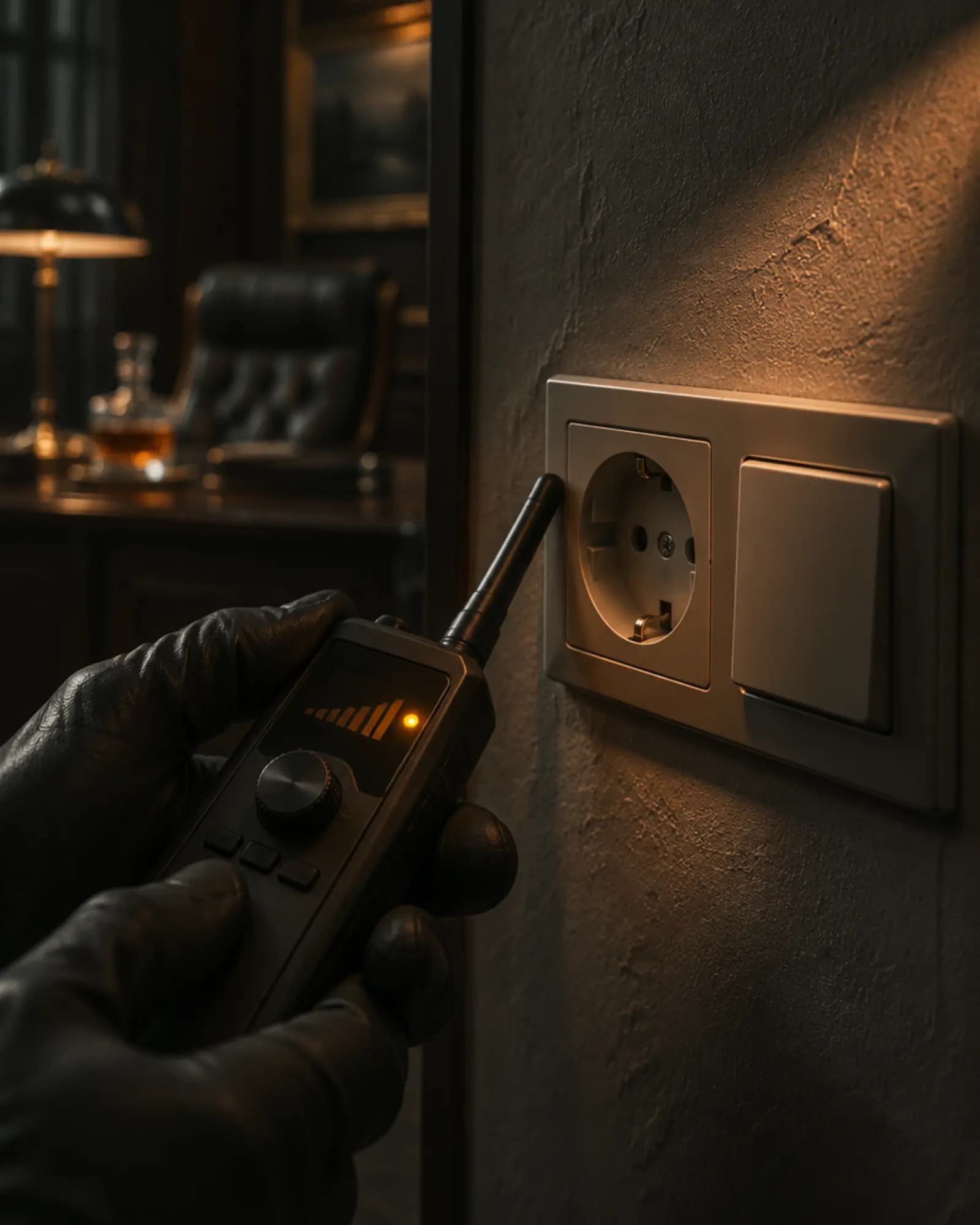
During a sweep we inspect premises and vehicles with professional equipment and help you put measures in place against further leaks. We also develop special equipment to prevent eavesdropping.
Frequently asked questions
How long does a sweep take?
It depends on the size and layout of the premises and the number of vehicles. We will give you an estimate when we agree the date.
Do staff need to be away during the sweep?
We recommend that as few people as possible know about it. We can schedule it outside working hours.
Do you check cars as well?
Yes. Vehicles are a common place for listening and tracking devices.